Wheel of Life Review
The Wheel of Life began with Paul J. Meyer in the 60s as a goal-setting tool, and it has evolved into many forms since. But in our work, we use it not to chase goals, but to reflect and assess, then take it all in..
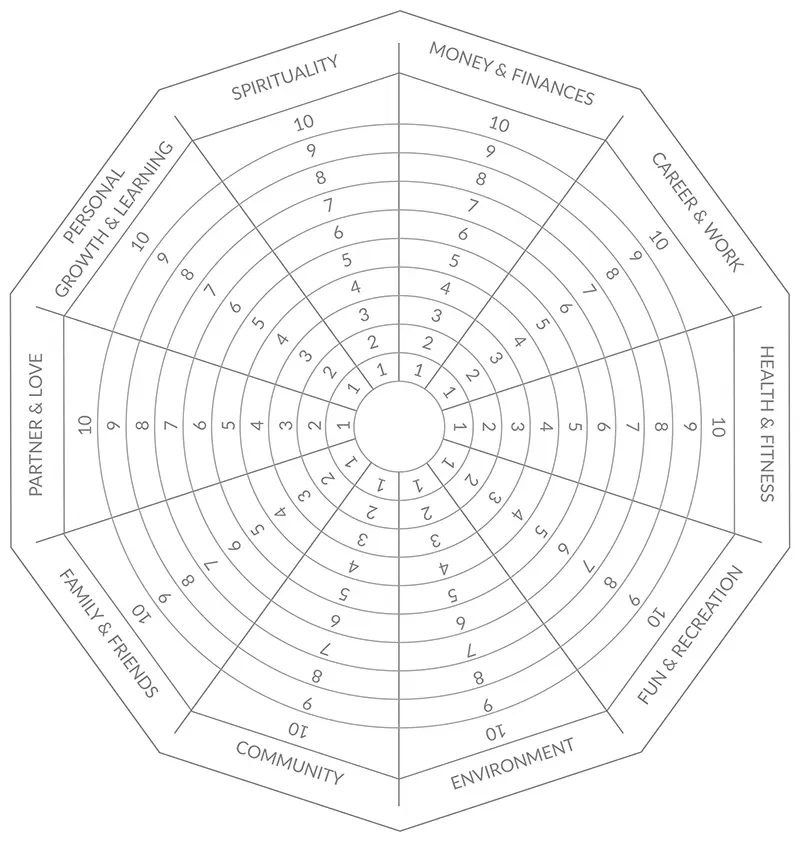
As you look at the shape of the wheel, what arises in you before you have words for it:
How do you actually spend your time in each area, and what does that reveal about what you truly value versus what you believe you should value? Where do the two diverge?
What surprises you most about what you see, and what might that surprise be pointing toward? a disowned desire, a buried grief, or an unnoticed strength?
What would a ten feel like in your body, not just in your mind? What would change in how you move through a day, and what might be standing between you and that experience?
Which category calls to you most, the one that feels most alive or the one you have been avoiding? What does your answer tell you about where your energy is bound up?
What would need to shift inside you for the score to rise, not just what you would do, but what you would need to feel, believe, or release? What is the internal condition for external change?
What small step would ripple most through your satisfaction, and what does your choice of that step reveal about the pattern underlying the whole wheel?
Could one action heal more than one area at once? If so, what might that action be asking of you about how you have been living, and what resistance do you notice in considering it?
Where do you feel most drawn to begin, and what might be pulling you toward or away from that starting point?
If the inner wheel could be reshaped, what would you be moving toward, and what does that trajectory say about what you long for at this stage of your life?
The Wheel of Life provides a snapshot of your current wellbeing and satisfaction across different areas of your life.
It offers an opportunity to pause and reflect on whether your life feels balanced, meaningful, and aligned with what matters to you.
By rating each area, you can identify where your needs are being met and where you may feel dissatisfied, disconnected, or stuck. The ratings are not objective measures, but prompts for exploring what may lie beneath your experience, including recurring patterns, competing desires, or tensions between what you want and what you feel you should want.
The process of reviewing your ratings can therefore offer more than a basis for goal-setting. It can create space to consider what is important to you, what may be getting in the way, and where greater awareness or choice might be possible.
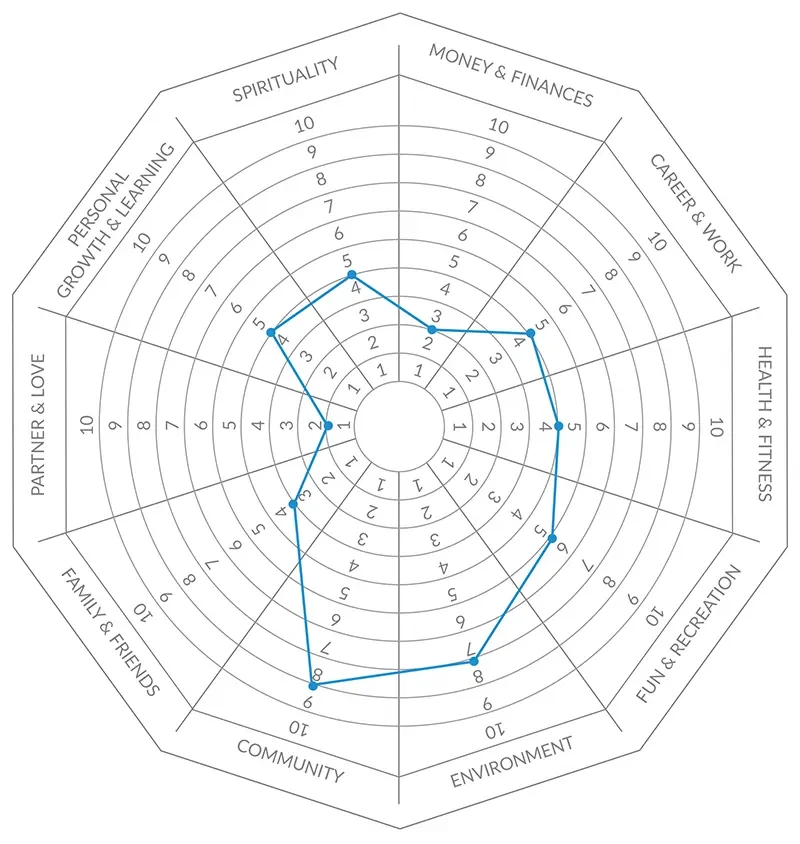
After you rate each one, draw a line connecting all the numbers, completing an inner circe.
Now close your eyes for 1 full minute and sit with what you see.
Example
If you want to go deeper. Give yourself 40 minutes to sit with a Free Guided Breathwork Journey :
Then ask yourself:
Has anything changed about how you experience your life Review Wheel?
Have any categories called you in now that you ignored before, And what did you realize you may have ignored about your review before?
Were you able to feel something about your wheel and everyone in it you had missed before?
What would need to shift now for you to act and redirect your path into alignment?